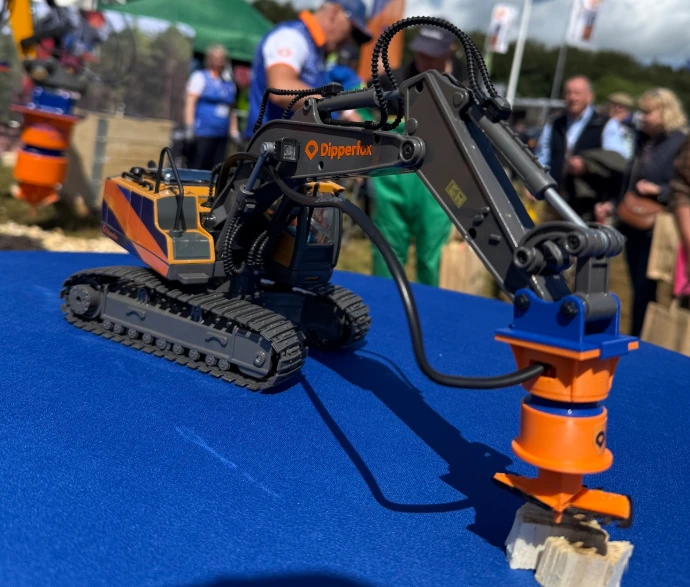
Which stump grinder should you choose?
Choose the Dipperfox SC400 for tight-access residential and urban work, the SC600 for mixed landscaping and medium-scale clearing, and the SC850 Pro for high-volume land clearing and infrastructure projects. All three are hydraulic stump removal attachments, which use a slow-speed, high-torque drilling action to cut into the stump.
When people compare stump grinders, the first question is usually how big a stump each model can handle. Yet stump diameter alone doesn't tell you which attachment will work best for your machine or the type of jobs you do.
Start by matching the attachment to your carrier's hydraulic capabilities, then consider site access and daily workload.
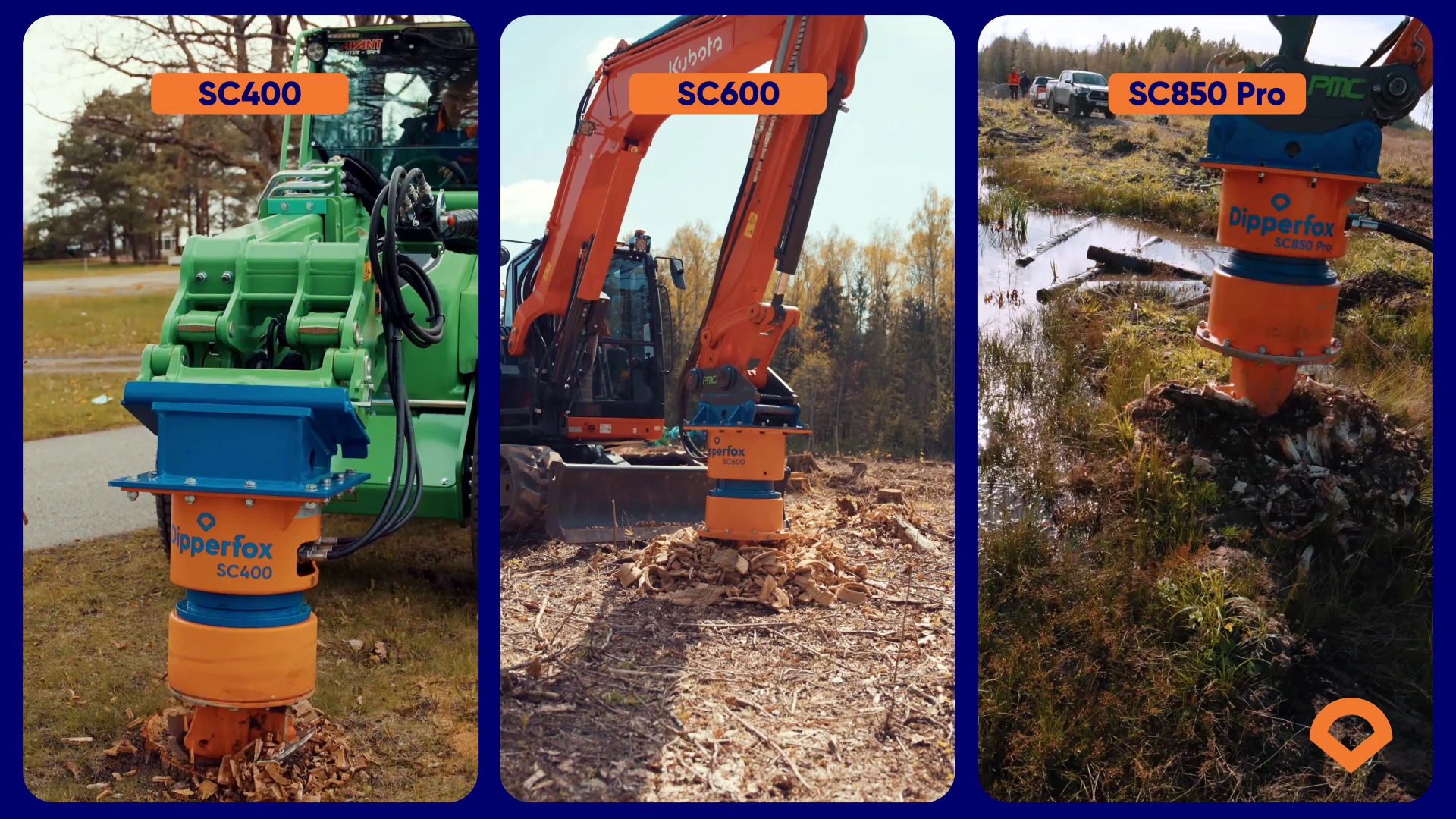
Dipperfox stump grinder comparison at a glance
Specification | Dipperfox SC400 | Dipperfox SC600 | Dipperfox SC850 Pro |
|---|---|---|---|
Ideal for | Residential landscaping, city landscaping and tight-access areas | Site preparation, development projects & large landscaping | Forestry, infrastructure projects & large-scale site clearing |
Carrier weight | 1-5 tons | 6-12 tons | 13-30 tons |
Hydraulic flow | 30-130 L/min | 65-150 L/min | 110-230 L/min |
Working pressure | 110-250 bar | 150-250 bar | 180-350 bar |
Cutting diameter | 400 mm | 600 mm | 850 mm |
Drilling depth | 590 mm | 700 mm | 900 mm |
The cutting diameter does not limit the size of the stump you can remove. You can tackle larger stumps by drilling overlapping holes.
How to match a Dipperfox stump grinder to your carrier?
Before comparing models, look at the machine that will run the tool. Check the hydraulic flow and pressure available at the attachment under load, as well as the mounting arrangement, return line, and case-drain requirements.
A carrier can look compatible on paper and still deliver less usable hydraulic power in the field. Factory settings, protective modes, and losses through the hydraulic circuit can all affect performance. In our experience, a pressure reading on the carrier's display does not necessarily tell you what reaches the attachment.
If the tool feels slow, check the carrier setup and blade condition before assuming there is a fault with the attachment. Keep flow and pressure within the model's specified limits, and have the hydraulic connections checked against the installation instructions.
SC400 for tight access and residential stump removal
The Dipperfox SC400 suits operators who work with compact machinery in gardens, urban spaces, and other sites where access and control matter. Its 400 mm cutting diameter makes it a practical choice for working around fences, paths and established landscaping.
Think backyard gates, narrow passages, greenhouses, driveways and flowerbeds. Usually, getting the machine to the stump and protecting the surroundings can take longer than removing the stump itself.
The SC400 can also work with suitable compact loaders and mini skid steers, as long as the mounting and hydraulic setup are compatible.
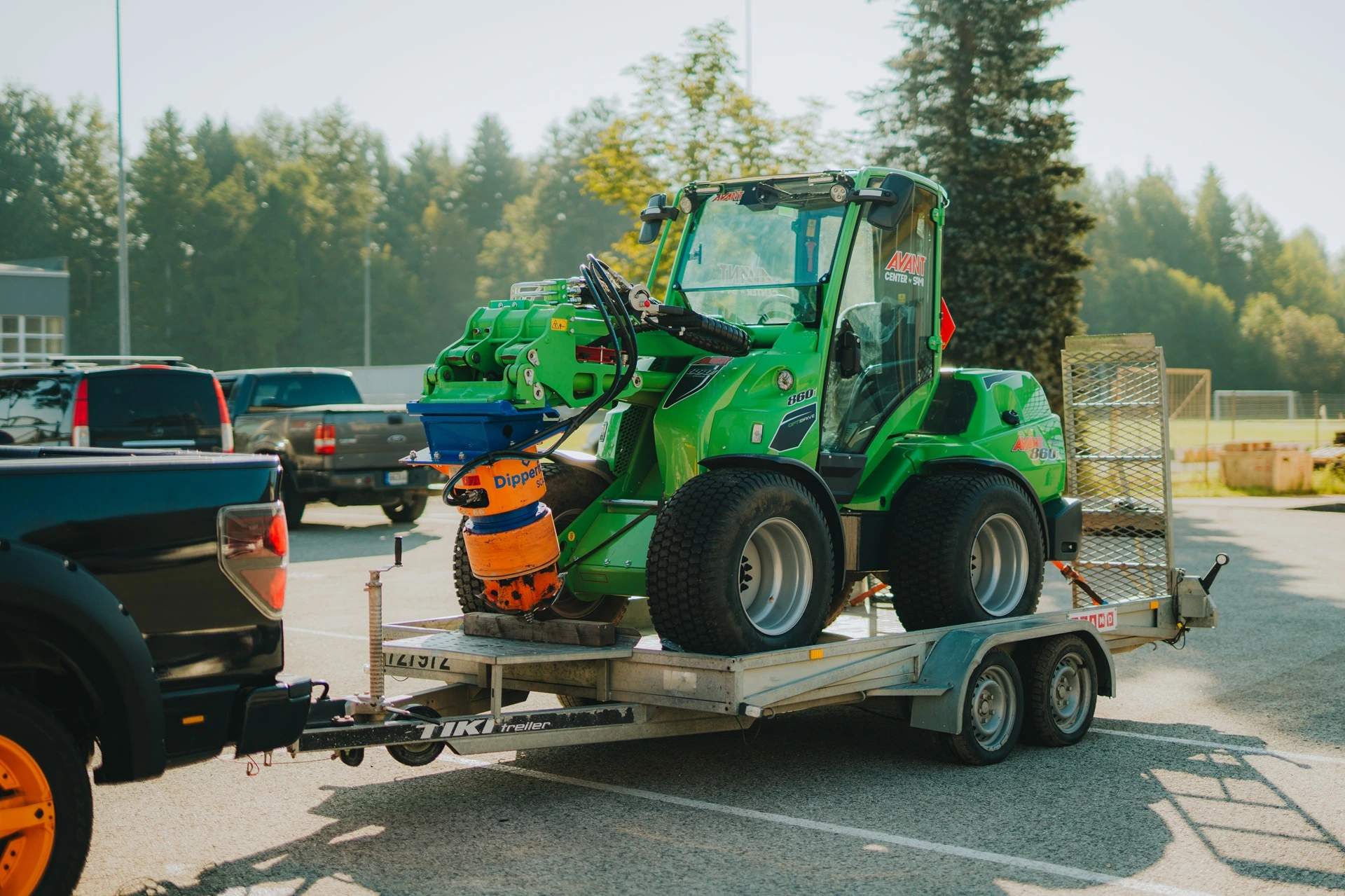
Its low-speed drilling action helps limit thrown debris compared with conventional high-speed grinding. It also keeps ground disturbance close to the stump, reducing the impact on surrounding lawns and landscaping. Chips are still produced, so safe working distances and protection for nearby property remain necessary.
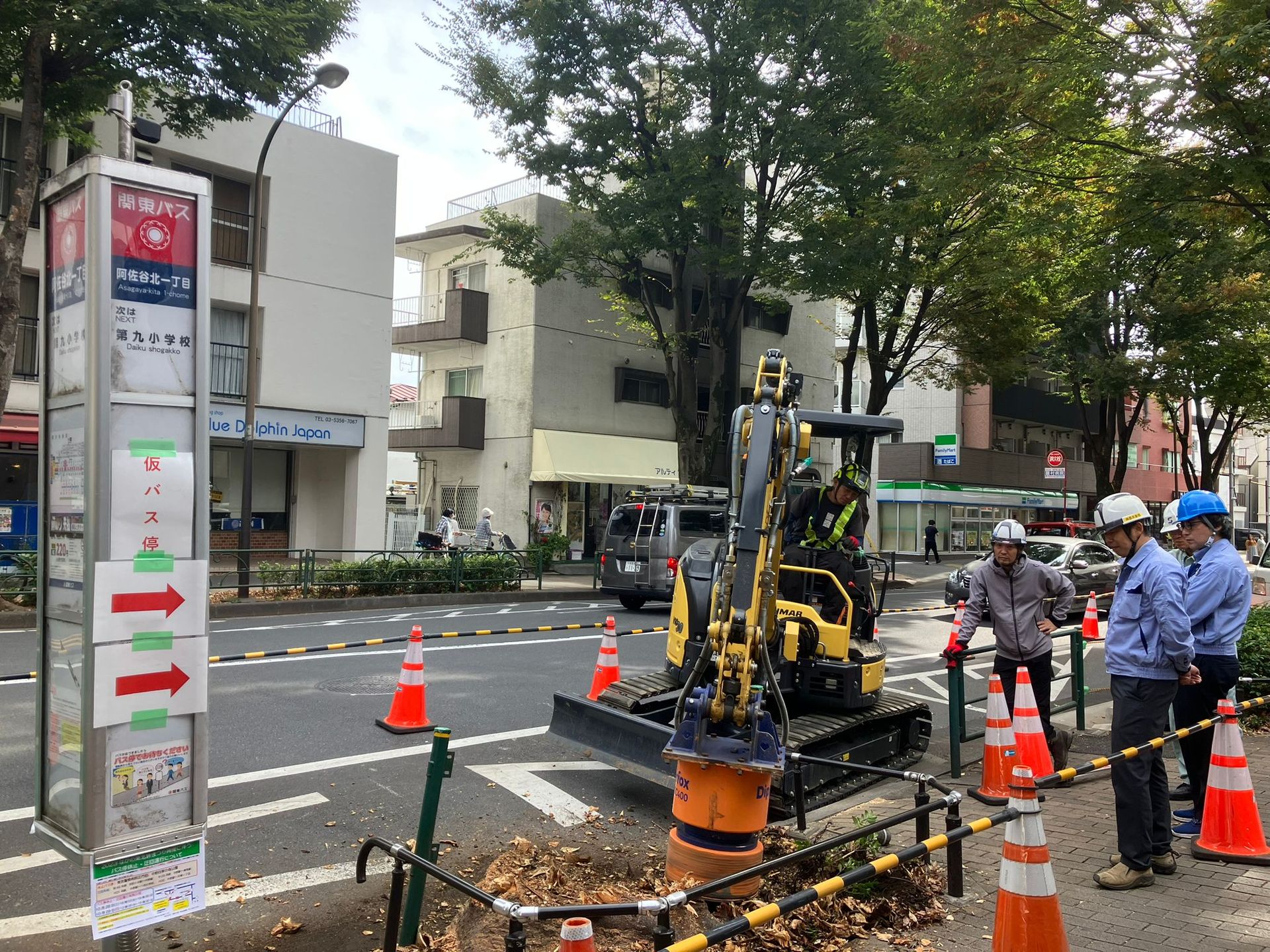
In Japan, Dipperfox's low-speed approach has significantly affected how companies work, especially in populated areas. Previously, controlling flying debris made stump removal a job for large crews, sometimes involving up to 20 people. After switching to Dipperfox, crews have reduced that number to around three. This has also created cost savings because fewer people manage the work zone and handle the clean-up afterward.
When you have to remove a stump wider than the cutting diameter, you can tackle it with multiple passes, overlapping drilled holes. That takes longer than using a larger, suitable attachment, but it can be a practical tradeoff when access limits the carrier size.
SC600 for mixed landscaping and medium-scale clearing
The Dipperfox SC600 is the middle option for contractors with a varied workload and a compatible mid-sized carrier. It suits municipal maintenance, parks, larger private properties and development sites where stump removal is a regular part of the job.
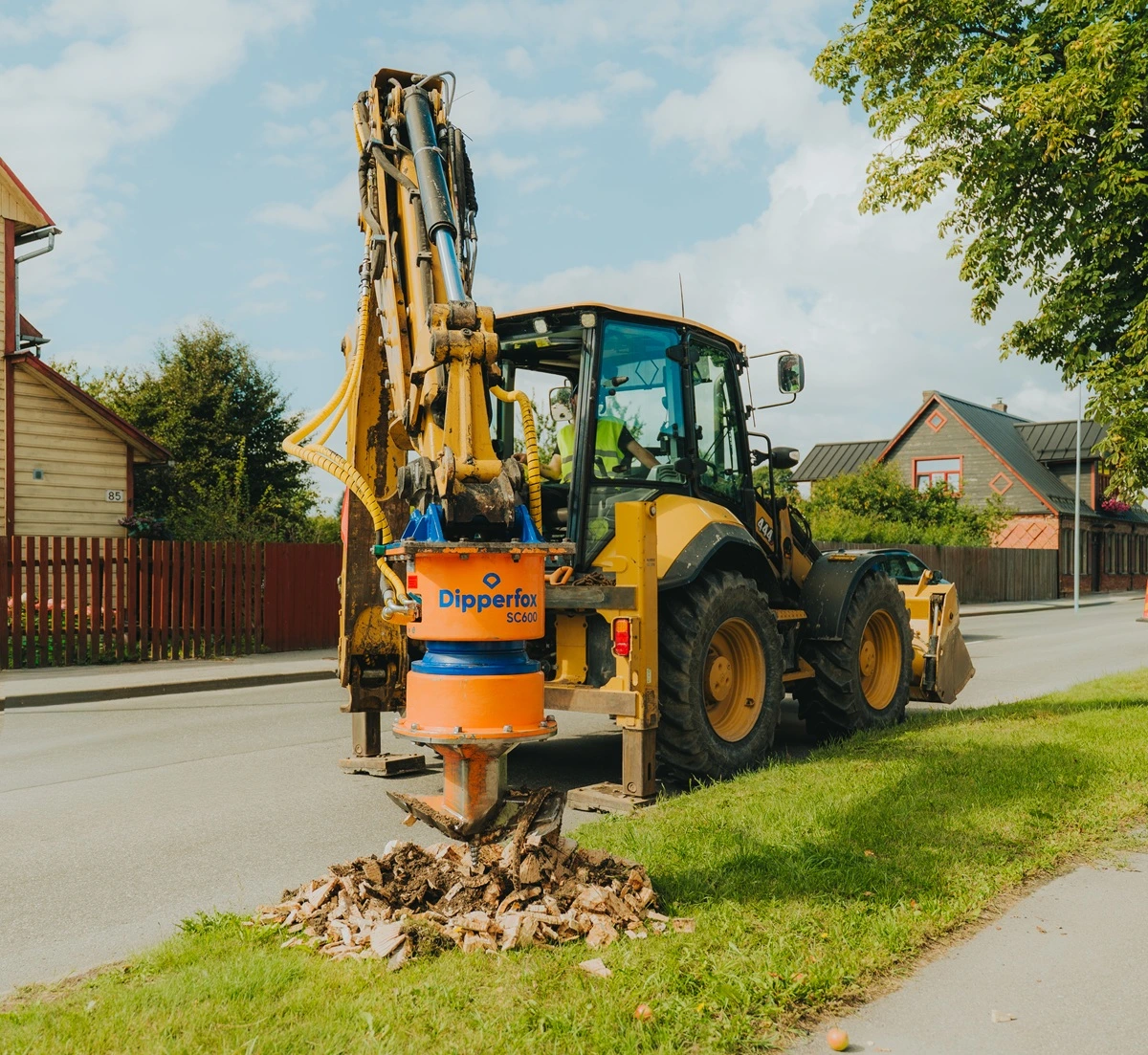
One day you might be working beside a park pathway. The next day it is a row of garden stumps, followed by a larger clearing job. The SC600 offers a larger cutting diameter than the SC400 while remaining an option for operators using mid-sized excavators.
In Italy, Marco Ceccoli's team at RAMMIT uses the SC600 in parks, gardens and along roadsides. Previously, digging out stumps with an excavator bucket meant removing around one to three stumps per day. With the SC600, Marco reports around 40–50, depending on their location. Processing stumps in place also means less material to transport and less ground to repair, helping the team finish each site sooner.
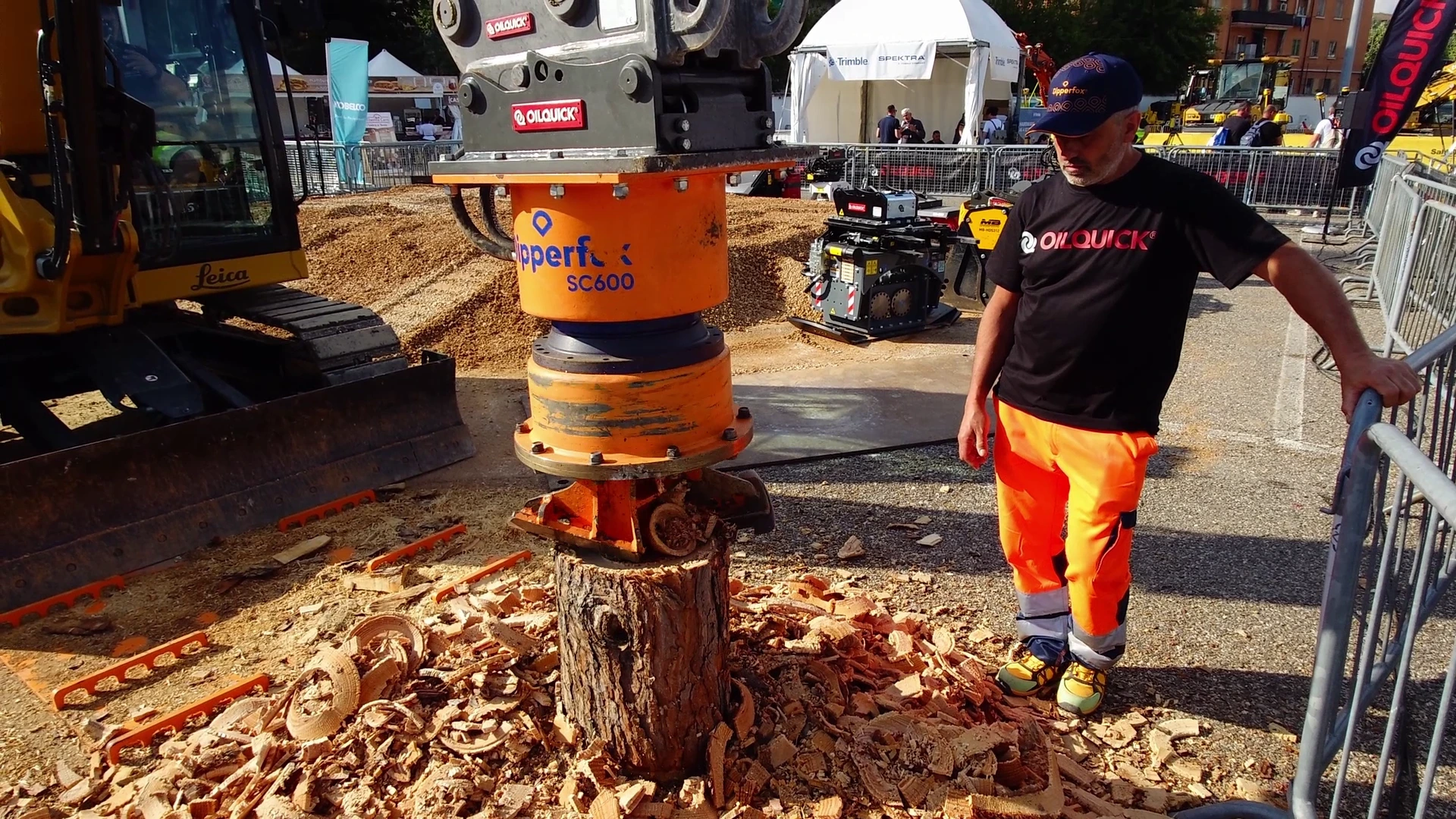
If you are deciding between the SC400 vs SC600, ask how often limited access is the deciding factor. The SC400 is easier to justify when small carriers and confined sites define the work. The SC600 becomes more useful when your compatible machine can support it and you regularly have more material to process.
As for performance, wood species, stump size, blade condition and hydraulic output all affect the result.
SC850 Pro for land clearing and infrastructure projects
The Dipperfox SC850 Pro is the model for high-volume stump removal on land clearing, road and utility corridors, forestry sites and large development projects. It makes sense when your excavator can support the attachment and stump removal needs to keep pace with the wider project.
On Estonia's Rail Baltica project, TREV-2 used the SC850 Pro to clear stumps along a railway corridor covering around 100 hectares. In trials and early work, the contractor reported clearing up to two hectares (or five acres) per day and reducing destumping time from roughly 70 days to about 50 on comparable scopes of work. That's 29% faster than planned! Processing the stumps on site also reduces hauling and removes landfill costs, helping crews move sooner into the next phase of construction.
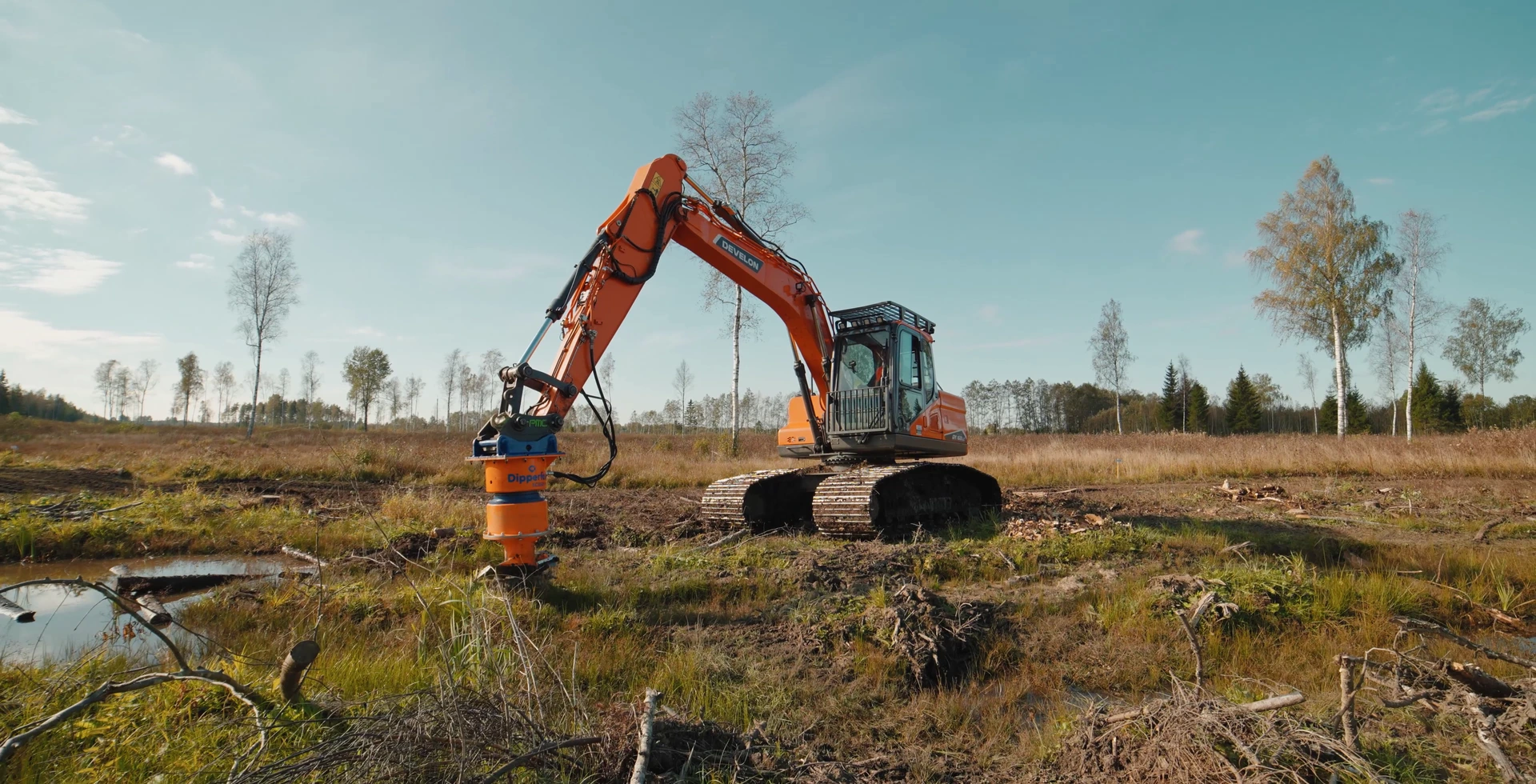
Its 850 mm cutting diameter and 900 mm drilling depth provide greater cutting coverage and reach below ground than the smaller models. A stump within the cutting diameter may be processed from one drilling position; larger or irregular stumps may require additional passes.
Excavator reach also matters. From one machine position, an operator can often reach several stumps, reducing repeated repositioning. Across a large site, that can save time and unnecessary machine movement.
If you are comparing the SC600 vs SC850 Pro, start with carrier compatibility. Then consider how often you face large stumps and sustained clearing work. A larger attachment is useful when its capacity matches the workload, and the machine can supply the required hydraulics.
How does blade condition affect performance?
Once you have chosen the model, match the blade configuration to the wood and working conditions.
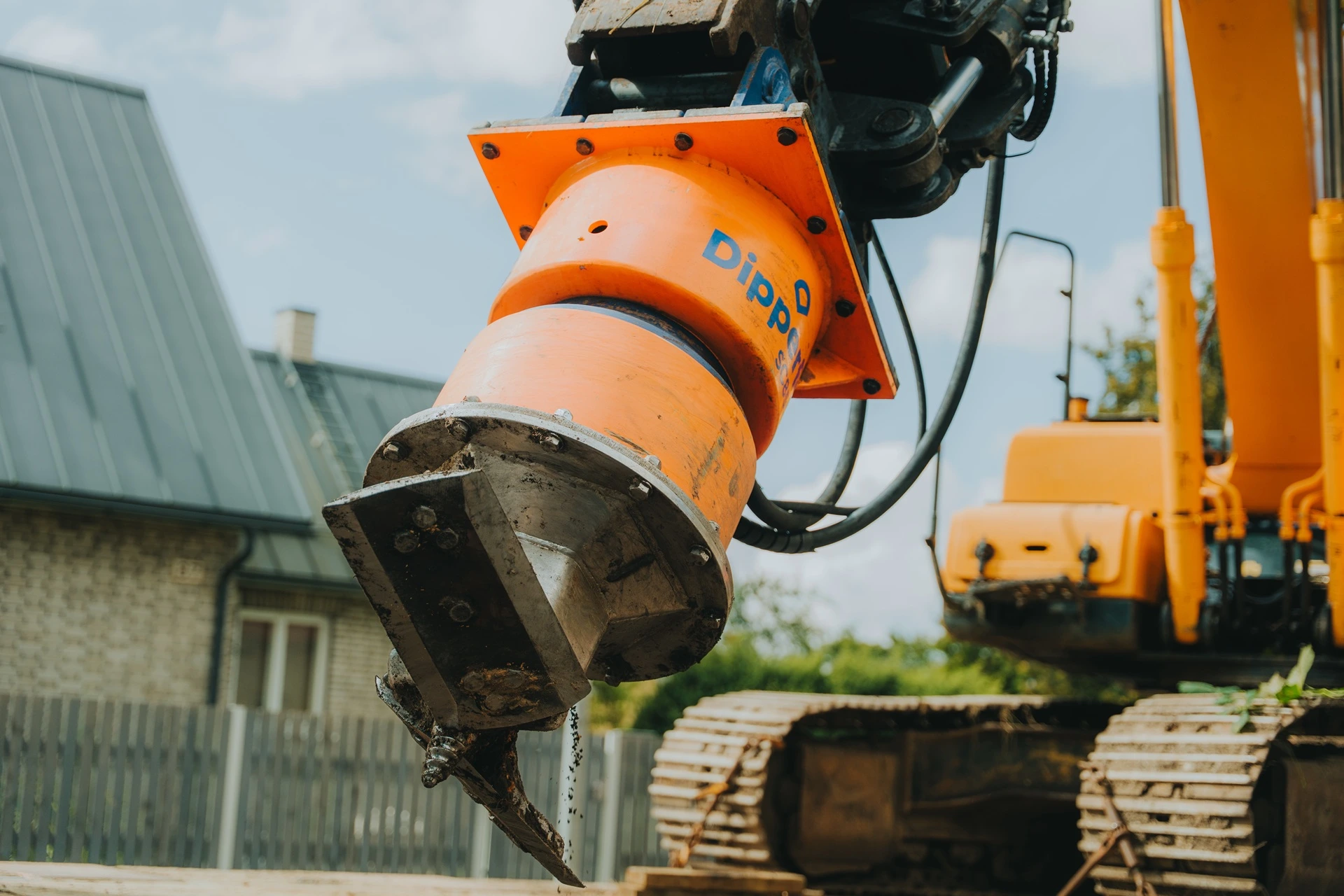
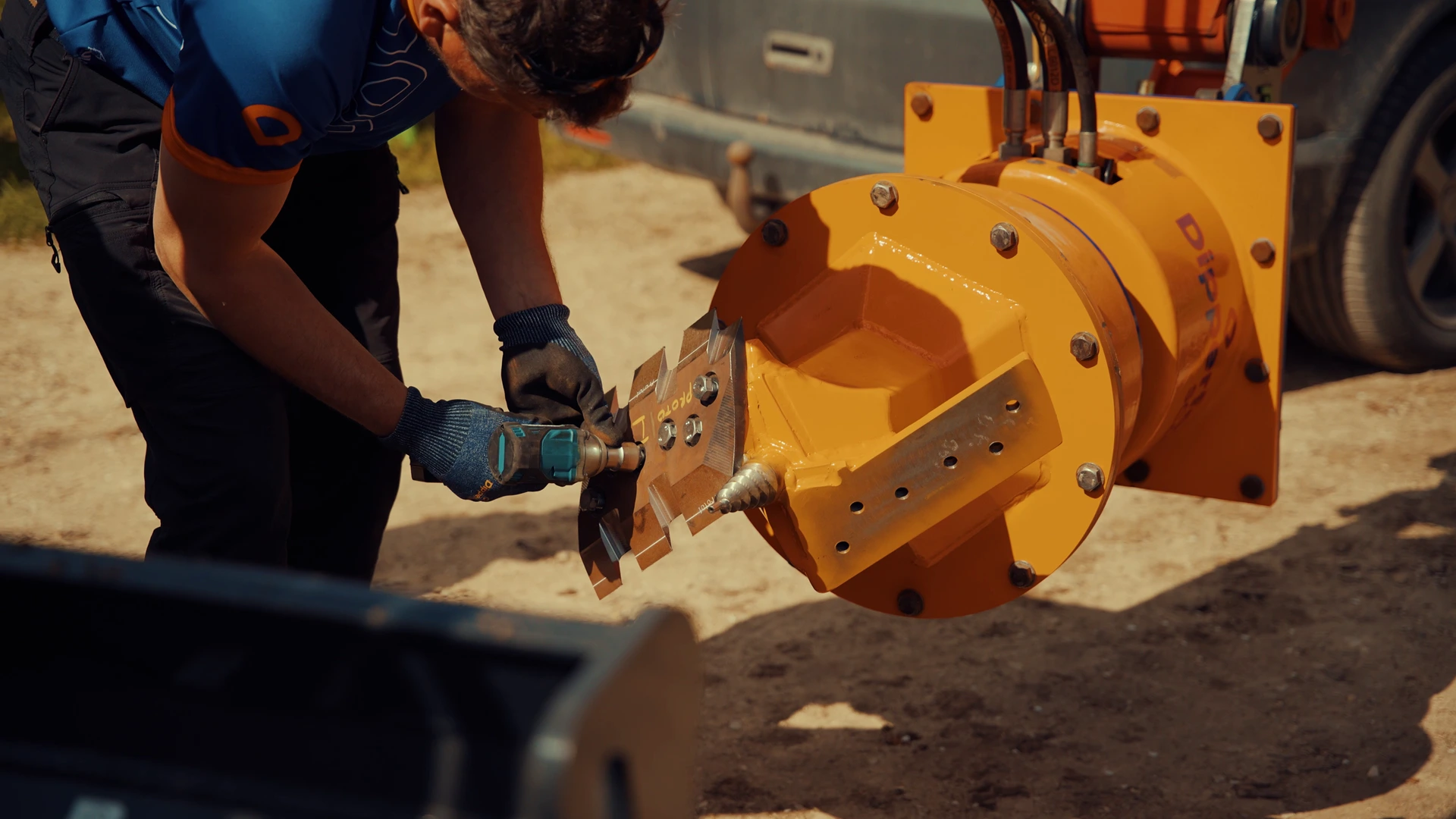
Toothed blades bite more aggressively into the wood, helping the tool work through tougher stumps and dense timber. They can also be a useful choice for older carriers. Straight blades provide a smoother, more even cutting action and are generally better suited to softer tree species and newer machines. The best choice depends on both the wood you typically encounter and your carrier's hydraulic performance.
Ask your dealer which screw and blade combination suits your typical stumps and carrier.
Blade condition matters on every model. Dipperfox cuts the wood, so dull blades or an incorrect cutting angle can reduce performance even when the carrier is correctly matched.
Check blade wear and cutting angle as part of routine maintenance. Sharpen or flip the dual-sided blades when appropriate, following the service instructions. A larger attachment will not compensate for a poor cutting edge.
Common questions about choosing a Dipperfox model
What is the difference between the SC400 and SC600?
The SC400 is the compact option for confined residential and urban sites. The SC600 has a larger cutting diameter and suits a compatible mid-sized carrier, like a skid steer, backhoe, or a medium excavator. The SC600 is ideal for mixed landscaping work or medium-scale land clearing projects. Choose according to your carrier compatibility and the type of stump removal work you do.
When should you choose the SC850 Pro over the SC600?
Choose the SC850 Pro when your compatible excavator (13-30 tons) is used for sustained, high-volume clearing and you need its larger cutting coverage. The SC600 is the more practical option when you deal with a variety of jobs, like residential work, construction, smaller land clearing projects, etc. This makes the SC600 an ideal tool for users who need an all-rounder stump removal attachment.
Can the SC400 remove stumps larger than 400 mm?
Yes. The 400 mm figure describes the cutting diameter. You can process larger stumps by making multiple passes and overlapping holes. With smaller and less powerful machines, like mini skid steers or compact loaders, stump removal takes longer. It also depends on the wood, roots, and soil conditions.
Is carrier weight enough to confirm compatibility?
No, because carrier weight is only part of the match. Confirm available hydraulic flow and working pressure under load, the mounting arrangement, stability, return line and case-drain setup before choosing an attachment.
Which Dipperfox model is best for residential work?
The SC400 is usually the best fit when restricted access and compact machinery define the job. For larger properties with many stumps and room for a compatible mid-sized carrier, the SC600 may be more practical.
Get help choosing the right stump grinder
Start with your carrier, then look at the site and the workload. That gives you a more useful answer than choosing by stump diameter alone.
Send us your carrier make and model, available auxiliary hydraulic flow and pressure, and a short description of your typical jobs. Contact Dipperfox to confirm compatibility and choose your model.