On peatland restoration projects, removing the stump is only part of the job. Another important aspect is what happens to the ground around it.
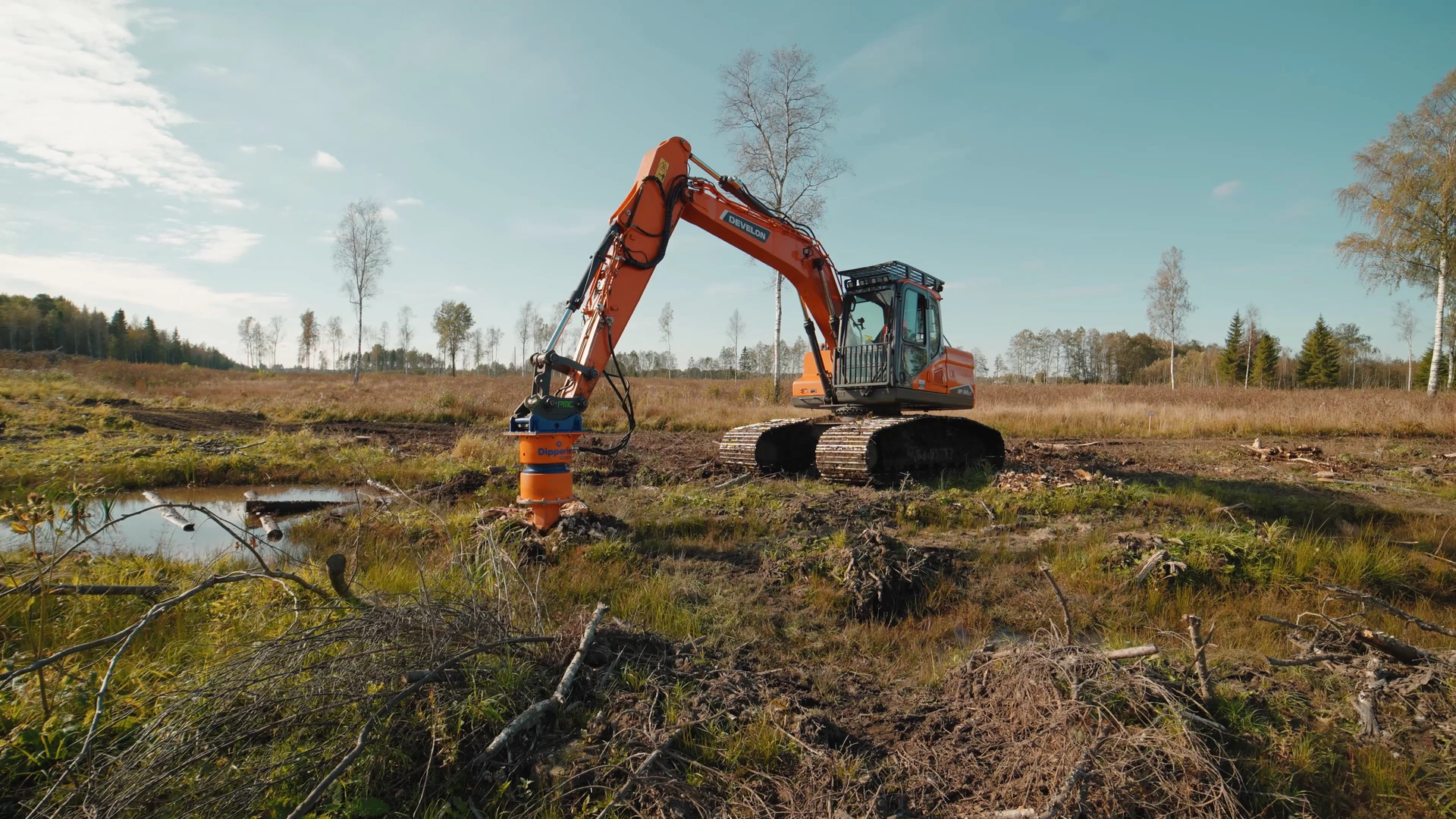
That was the job for Treeclear UK in Northumberland, where the team used a 15-ton, low ground pressure Takeuchi excavator fitted with a Dipperfox stump auger at a designated Site of Special Scientific Interest (SSSI).
These kinds of sites call for a careful approach. Wet ground, fragile peatland, conservation requirements, and leftover stumps are not well-suited to heavy-handed removal methods.
This is where your setup matters.
Removing stumps without tearing up the site
Treeclear UK specializes in low ground pressure forestry and peatland restoration across the UK. Their fleet includes lightweight, low ground pressure excavators and specialist attachments for vegetation clearance, mulching, stump work, and broader habitat restoration.
On this project, the goal was to remove stumps as part of ongoing peatland and habitat restoration work.
The challenge was not only the stump itself but also removing it without causing unnecessary disturbance to the wet, sensitive ground. The traditional method of digging out the stump removes it but also disturbs the soil, opens a hole, and creates more restoration work.
On peatland, that extra disturbance matters.
A low ground pressure excavator spreads its weight over the ground to reduce surface pressure. That helps the machine travel and work on soft peatland and wet ground with less impact than a standard setup.
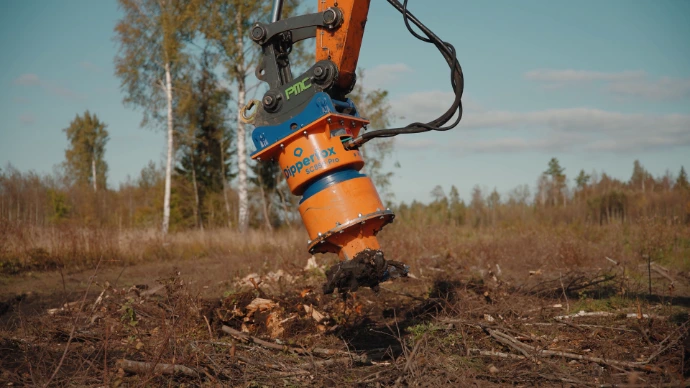
The Dipperfox attachment then deals with the stump from above.
Instead of digging out the entire root plate, the auger drills into the stump, breaks it down, and processes the main stump material in place. The operator can work stump by stump without constantly opening up the ground around each one.
Why this matters for peatland restoration
Peatland restoration often involves several stages: vegetation clearance, stump management, rewetting, ditch blocking, bunding, reprofiling, and the facilitation of the return of native peatland vegetation.
Stump removal is only one part of that work, but it can affect everything that follows.
If the site is left full of holes, disturbed peat, and pulled-up root plates, the next stage becomes harder. More tracking. More reinstatement. More time is spent repairing the work area before restoration can continue.
With Dipperfox, the stump is processed where it stands.
That helps reduce the need to transport stump material away from the work area. It also keeps the operation more controlled, which is especially useful on protected or sensitive ground.
A useful tool for conservation contractors
For Treeclear UK, the Dipperfox stump auger is part of a wider low-impact setup. The work does not stop at clearing vegetation; it must also support the restoration work that follows.
That means the machine setup has to match the site:
low ground pressure for soft and wet terrain
enough carrier size for productive stump removal
the right attachment for controlled work
fewer unnecessary passes over fragile ground
less disturbance before rewetting or revegetation work begins
Dipperfox fits the job because it removes the stump without turning the ground around it into extra repair work.
Where Dipperfox fits
Dipperfox is built for operators who need to remove stumps without turning the job into a second cleanup project.
Similar to restoration sites, the attachment helps operators remove stumps on forestry, infrastructure, farmland, and other job sites, without turning the job into a second cleanup project.
Removing the stump is only part of the work. The real cost comes from digging, moving, filling, tracking, transporting, and fixing the site afterward.